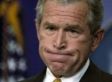
Friday, July 25, 2008

Squealers in Private Places


This week, President Bush was taped--presumeably by a cell phone camera--as he made wisecracks about the horrible state of the US economy. Some would say his remarks, which he thought were private, were in fact funny. But, think a bit deeper and consider whether or not you would appreciate the Commander-in-Chief, your president make fun of your financial situation if you were one of the many who had lost or were in process of losing the roof over your head or if you were a Boomer dreaming of retirement only to have those dreams smashed by a weakening economy and questionable stock market performance. How funny would the jokes be then? Probably not so much. Do many Americans even believe that the President understands what's going on with the economy? The image above was obtained from the Huffington Post.


Who, outside of the rich Republican donors at this private party, would ever have heard these remarks if not for the one "donor" who decided to video the "comedy" performance with a cell phone. Sure the President only has a few more months in office, but nevertheless, he should still be mindful that nowadays everyone has a cell phone equipped with a camera.


In old media news, Senator Barak Obama left a hand-written prayer note in the Jerusalem's Prayer Wall. The note was removed and printed in an Israeli newspaper, Maariv, which suffered much ridicule as a result of its decision to print the contents of his note. According to an article, at least one other paper had received access to the note, but refused to print it. Other papers ignored the story. The AP image above shows Senator Obama at the Western Wall.


Friday, July 18, 2008

Olive and Blackberry

This week's posting is about two new media topics worth mentioning here.

The first is that the world's oldest known blogger, Olive Riley, has died. I first discovered this story on a CNN crawl earlier in the week and found a picture and several articles about the world's eldest blogger. According to an article on the age.com, Ms. Riley, an Austrailian women, age 108 at her death, made her last blog posting on June 26. According to an article in the Chicago Tribune, Riley's was introduced to blogging in 2007 and posted a total of 70 blogs entries on her blogs. Her first blog was allaboutolive.com.au and and the majority of her postings were on her second blog, worldsoldestblogger.blogspot.com.

The second topic is how heavily traditional news media depends on new media. This is literally an observation I made earlier in the week. I was watching the Fox news channel and in the middle of the reporters typed agenda came "breaking news" update about the Indymac banking crisis. The news was so breaking that the live reporter read the update from his Blackberry. I snapped a photo as proof and here it is. So, if cable news reporters get their news from their Blackberries why are we paying for cable and smartphones?


Friday, July 11, 2008

What Gets Lost in the Toss

Notes on a C-SPAN discussion...

Earlier this week, there was a television rebroadcast of a CSPAN panel discussion: "The Modern Presidential Election Campaign Google, YouTube and the National Journal". The panel consisted of: Mark Helperin, the editor-at-large and senior political analyst for Time magazine; Katherine Horn, the online editor of DCexaminer.com; James Kotechi, a video blogger who now works for Politico.com; and Kevin Madden, a former member of Hillary Clinton's campaign committee. The panel discussion was very interesting, and I decided to use this week's blog post to highlight some of the points the panelists made that are pertinent to the uses and effects of new media in news media.

Here's a summary of the pro's and con's of new media by panel participant.

According to Mark Helperin, new media opens up the new forum to everyone and makes it more democratic, but the average joes who are blogging are voicing angry and personal opinions moreso than objective news and insights. He also suggests that these angry and slanted new voices are causing new media to lead in muckracking. From his perspective, the greatest success of new media is in its ability to obtain dominance in market share. Because people are increasingly turning to new media outlets to obtain their news, old media is less likely to do the sort of indepth journalist reporting the public expects from traditional papers.

Katherine Horn agrees to a degree with Helperin. Her observation is that the democratization of media allotted by the onset of new media has introduced an "angry rhetoric" into news media. She finds that the risk of a democratized media is that the angry rhetoric has the potential to overshadow the facts and importance of the stories. She finds that new media does give citizens the opportunity to become reporters themselves and gives reporters in old media the opportunity to become personalities.

James Kotechi found his niche by becoming a political video blogger on youtube while he was a student at Georgetown University. Kotechi feels that in the future, campaigns are going to use websites to compete with both old and new media entities. For Kotechi, such websites are most effective when they are used as mediums that present facts about the candidates instead of mediums that propagandize the candidate.

From a presidential campaign perspective, Kevin Madden has observed that new media allows candidates "to operate at a higher level of speed and precision." This opportunity to operate at a higher level of speed and precision is especially useful if the candidate's opponent isn't doing the same. In such a case, where use of new media used more precisely and pointedly, it can allow the candidate an ability "to obliterate [his or her] opponent." On the other hand, Madden does recognize the fact that, because information--whether accurate or not--travels so fast online, new media also has the ability to destroy either candidate's message and reputation as well.

Each of these panelists presented ideas and observations about new media that every should ponder. While many champion the democratization of news media that has resulted from new media because it gives everyone a voice, very few seem to consider how the voices align themselves with one another. The issue becomes deceptive subjectivity which leads to the question of whether or not a million subjective bloggers are of more benefit to the accuracy of new reporting than two or three trusted traditional journalists? Is new media better and more reliable or is it just cheaper and faster? Should we readily pack up printed paper and throw tradition out of the window for immediacy or should we all take a step back and consider what might be lost in the toss?

Sunday, July 6, 2008

Using the Internet Not New in Politics

Using the web in elections is not new, as articles posted on MSNBC.com show that other countries around the world have even experimented with using the web as an alternative way to cast ballots in elections. In 2003, the U.S. government used the Internet to permit soldiers and civilians overseas to vote. The program, known as SERVE—Secure Electronic Registration and Voting Experiment—had both supporters and opponents. This was the second such electronic voting experiment. In 2005, the country of Estonia became the first country in the world to host internet elections. The article reports that the country hailed the election a success despite low participation. So perhaps it is not that the Internet has become a new platform for elections, but the ways that American politicians are using Web 2.0 to transform the voting public’s traditional expectation of U.S. Presidential campaigns.

A number of media outlets have been discussing perhaps the most prominent issue of the ’08 presidential race—the Internet. Talk of the economy, tax breaks and hikes, the war in Iraq is being conducted in a new forum—online. Gone are the days when the Big 3 had control over how the public was made aware of the candidates’ ideas, opinions, slipups, and media flubs—whether the public was interested or not. In fact, the Internet is the new battleground. There are vast differences in the ways McCain and Obama are using the web and traditional and new media news outlets are beginning to cover the advantageous and ineffective ways the GOP and Democratic Party candidates are using the web. An article, “Measuring Up Online” by Bridget McCrea posted at Black Enterprise website highlights the differences in the way that the candidates are using the web. The article discusses how the candidates are using the web to reach potential voters.

New media can expose inconsistencies in the election process as in the video of illegal tactics used in the recent Zimbabwe election made public by the Guardian online a British newspaper.

More college students need financial aid

Across the country many of today’s college graduates will earn a degree and a lot of debt

By Deidra Lee

Across America many new high school graduates have their sights set on higher education at one of America’s 1700 public colleges and universities. Traditionally tuition and room and board at state-supported colleges and universities has been more affordable than private ones, which makes them a draw for students, but the affordability of public colleges and universities is vanishing. As a result, students are turning to financial aid, which means that the average first-time college graduate has approximately $20,000 of financial aid debt.


A recent graduate Virginia Commonwealth University, Gyvonia Gunter, views financial aid as a necessity for today’s college students. “I feel that because of inflation and today’s skyrocketing costs for education it’s absolutely necessary to use financial aid to fund one’s education,” said Gunter.


According to a non-profit organization, The College Board, which works to aid students in college success, the average annual average undergraduate in-state tuition at a public American university for the 2007-2008 academic year was approximately $6,185.00 and the average annual in-state room and board fees were approximately $7,404.00.


Despite rising costs, students continue to enroll in public colleges and universities in increasing numbers. “Enrollment is up at VSU,” said Associate Vice President for Student Affairs and Enrollment Management at Virginia State University, Michael Shackleford.


To bridge financial gaps, more and more students at public colleges and universities are turning to federal financial aid. Vice President of Financial Aid at VSU, Henry Debose notes that rising costs of going to college have caused all sectors of the population to seek financial assistance.


“Federal student loan programs are a well-known method for paying for a college education, but they can prove costly to the student.” Debose said.


Aisha Bailey, a doctoral student at Indiana University at Pennsylvania believes that financial aid makes college more affordable for everyone.


“I think it’s a fair way to make college equally available to a wide variety of American citizens,” she said.


Both Gunter and Bailey suggest that public colleges and universities should provide its citizens with a free education.


“Education benefits citizens in so many ways the cost of the expenses to the public would be worth the pay off in lower crime rates, higher wage earners, and more productive U.S. citizens,” Gunter said.


While Bailey does agree that public education should be free, she sees free education in exchange for public service as a viable alternative.


“As a student who has taken out loans for graduate school and as a person who upon graduation will face many years of loan repayment, I don’t necessarily see free education in exchange as a bad thing. Anything is better than being in debt,” said Bailey.